M Type Flat Metallic Yarn for Knitting and Weaving | Sparkle Textile
What Is M Type Flat Metallic Yarn
Unlike conventional round yarn, M type metallic yarn has a thin, ribbon-like structure. The PET film is metallised, colored and slit into narrow, uniform widths. When the strip lies flat, it produces a bright reflective flash. When it twists inside a fabric or cord, the reflection becomes more scattered and creates a sparkling effect.
This simple construction makes M type yarn suitable for product developers who want visible metallic color without adding heavy decoration. It is also an important raw material for wrapped embroidery thread and other metallic fancy yarn constructions.
Product Specifications
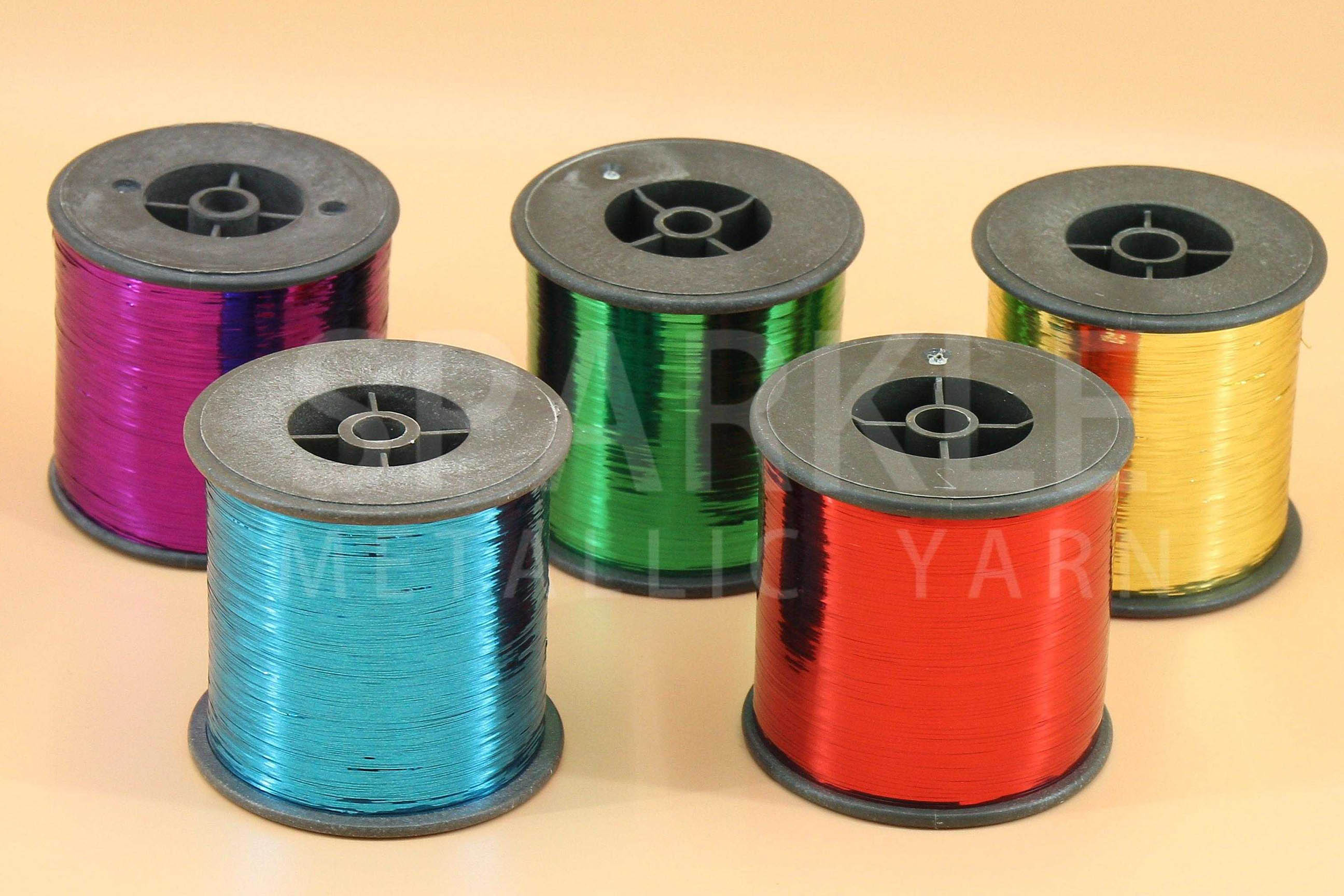
Item | Available Direction |
Product type | M type flat metallic yarn or flat lurex yarn |
Composition | Metallised PET film slit into narrow strips |
Film thickness | 12 micron 15 micron and 28 micron options |
Common widths | 1/100 inch 1/69 inch 1/50 inch 1/32 inch and 1/25 inch |
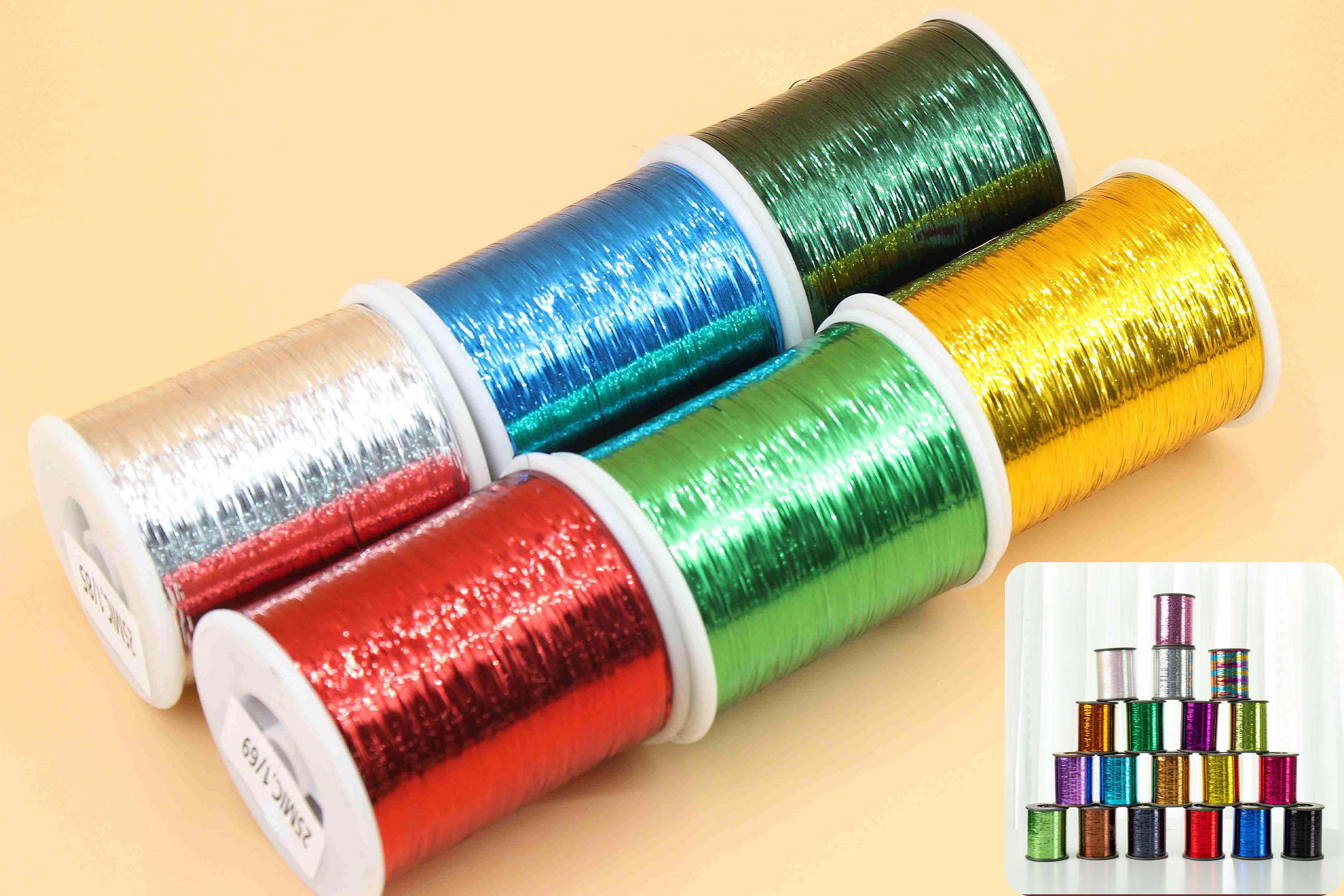
Color options | Silver gold colorful rainbow black matte and custom colors |
Cone weight | Common net weights include 100 g 150 g 200 g and 300 g |
Typical processing | Machine or hand knitting weaving braiding twisting cords ribbons lace and decorative work |
Customization | Width thickness shade cone format and packing can be discussed according to the project |
How Width and Thickness Change the Result
The same metallic color can produce very different results when the strip width or film thickness changes. A narrow strip usually creates a finer sparkle and integrates more discreetly with the ground yarn. A wider strip exposes more reflective surface, so the effect becomes stronger and more graphic. Increasing film thickness can add body and visibility, but it may also increase stiffness. These relationships are useful starting points rather than universal rules because machine settings, stitch density and the companion yarn also influence performance.
Width | Visual Direction | Useful Starting Point |
1/100 inch | Fine highlight | Lightweight fabrics fine twisting subtle decorative lines and delicate sampling |
1/69 inch | Balanced sparkle | General knitting weaving fancy yarn ribbons and mixed constructions |
1/50 inch | More visible shine | Decorative knit panels cords trims bands and statement details |
1/32 or 1/25 inch | Broad reflection | Bolder accents craft work ornaments packaging and applications that can accept more body |
For film thickness, 12 micron is generally selected when lightness and flexibility are priorities. A 15 micron film offers a middle ground, while 28 micron provides more body for a stronger decorative statement. The best specification should be confirmed with the actual machine, base yarn and finished product instead of being chosen by appearance alone.
Suitable Machines and Processing Methods
M type yarn can enter several textile processes, but its flat film structure requires smoother handling than an ordinary polyester yarn. The following equipment categories are practical starting points for product trials.
Machine or Method | Typical Output | Processing Note |
Flat knitting machine | Sweater panels collars cuffs fashion knitwear | Use as a plated accent or combine with a base yarn and begin with low steady tension |
Circular knitting machine | Sparkle jerseys socks and decorative knit structures | Use a smooth feeder path and test a limited number of metallic feeds before scaling |
Weaving loom | Decorative fabrics ribbons labels and trims | Often easier as a decorative weft or in selected picks because warp use creates more repeated abrasion |
Twisting machine | Fancy yarn combined with polyester nylon cotton or other yarns | Match twist level to the desired coverage softness and surface stability |
Braiding or cord machine | Cords ropes shoelace details bands and narrow trims | Check guides and eyelets for burrs that can scratch or split the film |
Hand knitting or crochet | Crafts accessories ornaments and prototypes | Keep the yarn relaxed and avoid pulling sharp bends into the strip |
Embroidery equipment | Special decorative accents and selected motifs | Run a compatibility sample first because wrapped ST type thread is usually more suitable for continuous high speed machine embroidery |
Practical Tips for Smooth Production
1. Start with low and stable tension. Flat metallic film should feed without being stretched, pinched or pulled through the tension path.
2. Inspect every contact point. A small burr on a guide, eyelet, needle or tension disc can scratch the coating or split the strip.
3. Use a separate feeder when possible. Independent control prevents the metallic yarn from being over tensioned by the setting used for the base yarn.
4. Reduce speed during the first trial. Increase production speed only after checking breaks, loops, surface damage and color consistency.
5. Evaluate the fabric after relaxation. Metallic yarn can shift visually when a knit or woven structure relaxes, so judge the final sparkle after the sample is off the machine.
6. Test finishing conditions. Heat, steam, washing chemicals, friction and pressing pressure may change the film surface, so validate the exact finishing route before bulk production.
7. Store with care. Keep cones clean, dry and protected from direct sunlight, excess heat and crushing pressure.
Main Applications and Finished Products
M type flat metallic yarn is not limited to one fabric category. It works as a surface accent, a structural decorative strand or a component inside another fancy yarn. The most successful use is usually the one that matches the strip width and support level to the product's touch, flexibility and durability requirements.
Application | Possible Finished Products | Design Value |
Knitwear | Sweaters cardigans rib panels cuffs collars scarves hats and socks | Fine sparkle throughout the fabric or concentrated highlights in selected areas |
Woven textiles | Decorative fabric checks stripes jacquards table textiles and curtain accents | Reflective picks that respond to movement and changing light |
Narrow fabrics | Ribbon lace webbing elastic bands labels and trims | Clean metallic lines or a dense ornamental surface |
Footwear and bags | Shoe uppers laces braided details straps and decorative panels | Sporty or fashion driven shine in a small controlled area |
Fancy yarn | Twisted yarn with polyester nylon cotton or blended yarns | A rounder handle with distributed sparkle and improved support |
Garment decoration | Logos motifs trademarks edge details and wedding or occasion accents | High visibility details without adding heavy components |
Craft and packaging | Ornaments artificial flowers tassels gift ribbon cards and seasonal decorations | Broad color choice and immediate visual impact |
Hair and fashion accessories | Braids bows headbands belts and costume elements | Bright reflective highlights for trend led collections |
How to Choose the Right Specification
A useful inquiry does more than request a color. It explains the construction, machine and finished product, allowing the supplier to recommend a practical width and thickness. Before asking for a sample, define the following points.
· Target appearance including subtle shimmer balanced sparkle or a broad metallic flash
· Machine type gauge feeder arrangement running speed and expected order quantity
· End product such as sweater ribbon woven fabric cord lace ornament or packaging
· Companion yarn including fiber content yarn count color and whether the metallic strip will be plated or twisted
· Required color under the actual retail or production lighting
· Finishing and care conditions including heat steam washing friction and pressing
For a new development, order enough material for machine setup and finishing tests rather than approving the shade from a loose strand alone. A metallic color can look different on the cone, in a small swatch and across a complete garment or textile panel.
Color Development and Customization
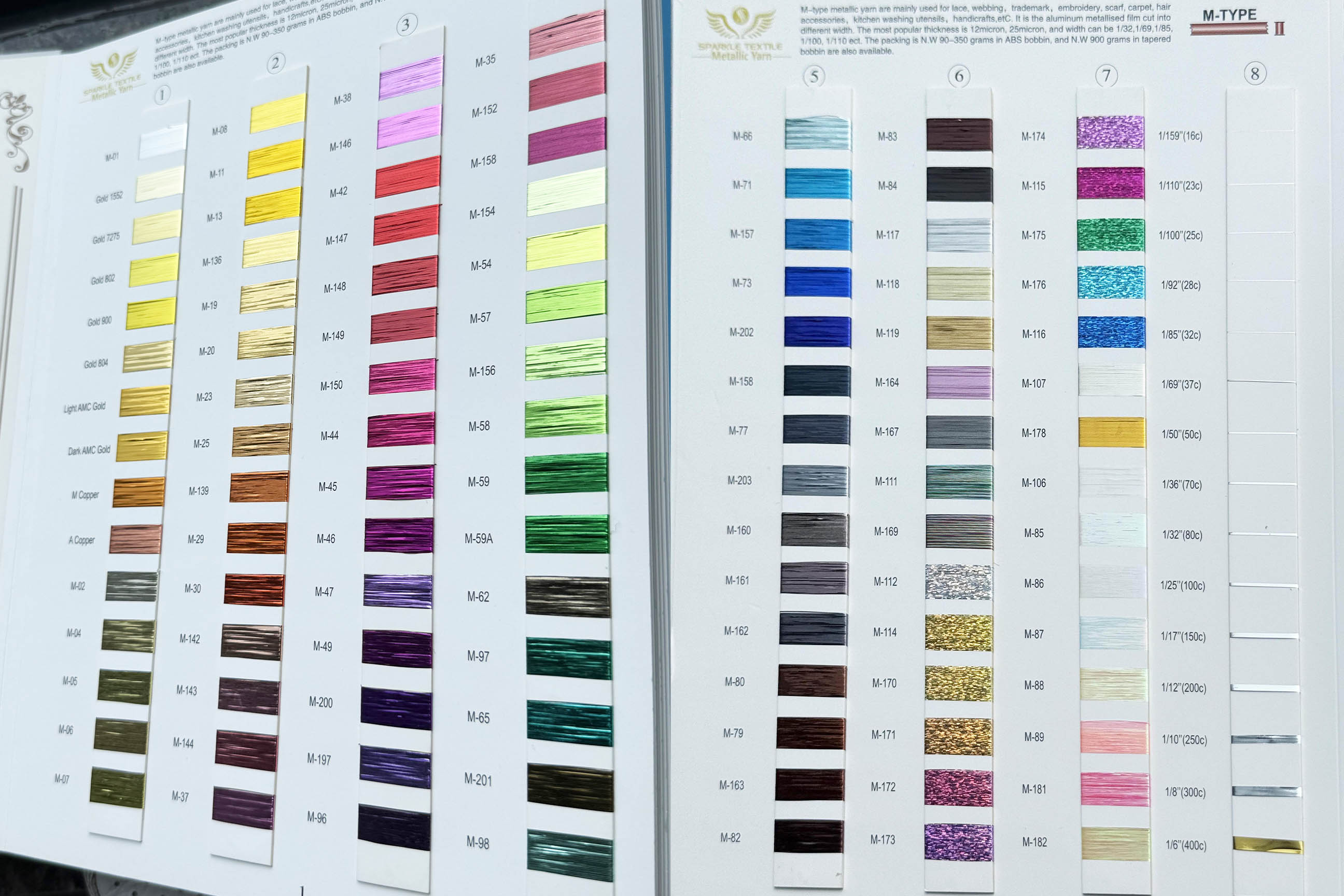
Gold and silver are the core metallic choices, but M type yarn can also be developed in bright colors, deeper fashion shades, rainbow effects, black and matte finishes. Color selection should be made with the end structure in mind. A warm gold may appear richer when twisted with brown or cream, while the same gold can look sharper against black or navy. Silver works well for cool, technical and minimalist effects, and colored metallics can create a more playful or seasonal direction.
When requesting a custom color, provide a physical standard or an agreed color reference, explain the base fabric color, and identify the required lighting conditions. Final approval should be based on a production representative sample because film angle and surrounding yarns influence the perceived shade.
Why Choose with Sparkle Textile
Sparkle Textile supplies M type flat metallic yarn in multiple film thicknesses, slit widths and color options. Gold, silver, colorful, rainbow, black and matte effects are available, and custom color, cone format and packing requirements can be discussed according to the project.
Our team can recommend a suitable starting specification based on your machine and application. Samples and production testing help ensure that the selected yarn provides the required reflection, flexibility and processing performance.
For product details, samples or a quotation, please contact us:
Website: https://www.sparkletextile.com/
Email: info@sparkletextile.com
WhatsApp: +86-13738990393